Last updated: November 2026
The right cosmetic box inserts match your product's weight, shape and shipping route. For most beauty brands, that means a die-cut paperboard or corrugated insert, with extra support only where glass needs it. Get it right and your jars and bottles arrive whole, sit neatly and look worth the price the moment the lid opens.
What Are Cosmetic Box Inserts?
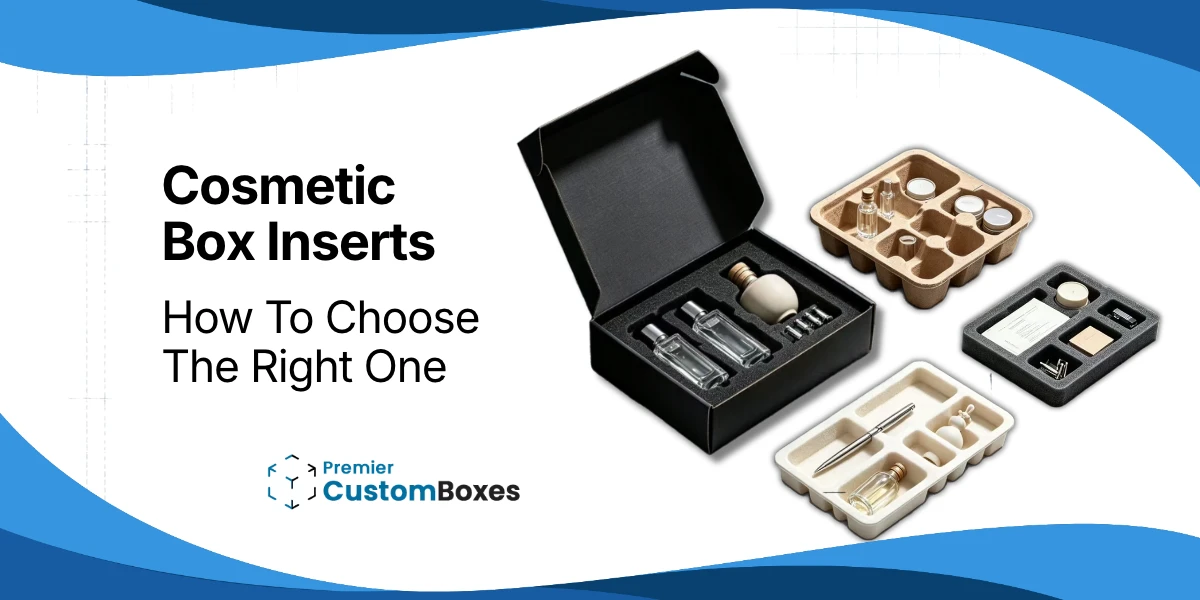
A cosmetic box insert is a shaped piece inside the box that holds each product in place. It stops items from sliding and knocking into each other. It also softens bumps and puts the product on show when the customer opens the box.
Quick answer
Choose a cosmetic box insert by matching the material to the product and the trip. Light items sold on a shelf do fine with a die-cut paperboard insert. Glass bottles and heavy cream jars shipped by parcel need corrugated, molded pulp or foam support. Measure the finished product, then approve a proof before printing.
| Quick guide | Details |
|---|---|
| What you need | Your finished product with its cap or pump on, a ruler or calipers, a small scale, a list of items per box and how you plan to sell it (shelf, parcel or gift set). |
| Time | Measuring and planning takes one short session. Our standard production is 10–12 business days after you approve the proof, and rush orders ship within a week. |
| Result | An insert that holds each item snugly, a box that closes cleanly and packaging ready for the shelf or the mail. |
Insert vs. box vs. divider: what's the difference?
- Box: The outer package. It might be a folding carton or tuck end box, a thin paperboard box that ships flat and has ends that tuck in. It could also be a rigid box, a thick gift-style box that doesn't fold flat.
- Insert (also called an inlay or tray): The piece inside that grips the product. It has a cavity, which is the cut-out hole where the product sits.
- Divider: A simple wall that splits the box into sections. It separates items but doesn't grip them.
The bottle, jar or tube your product comes in is called the primary container. The insert protects that container, so you size the insert around it.
Does Your Cosmetic Box Need an Insert?
Not always. You need one when the product is fragile, heavy, loose in the box or shipped by parcel. You can often skip it when a light product already fits the box snugly and only sits on a store shelf.
Signs you need one
- Glass: Serum bottles, perfume and glass jars can chip or crack when they knock against each other or the box wall.
- Rattling: Shake a filled box. If you hear a rattle, the product is moving. That's how labels get scuffed and caps work loose.
- Sets: Two or more items in one box will bump together without separate cavities.
- Parcel shipping: Online orders get dropped, stacked and shaken on the way to the buyer.
- Premium price: A gift set or luxury cream looks unfinished if it slides around in a big box.
When you can skip it
- A single lipstick or lip balm in a box sized to fit it closely.
- Light plastic tubes sold only on a retail shelf.
- Products that already sit in a tight-fitting carton, like many custom foundation boxes built to the bottle's exact size.
Our honest view: if the box fits snugly and never goes in the mail, you probably don't need to pay for an insert. Spend that budget on the print instead.
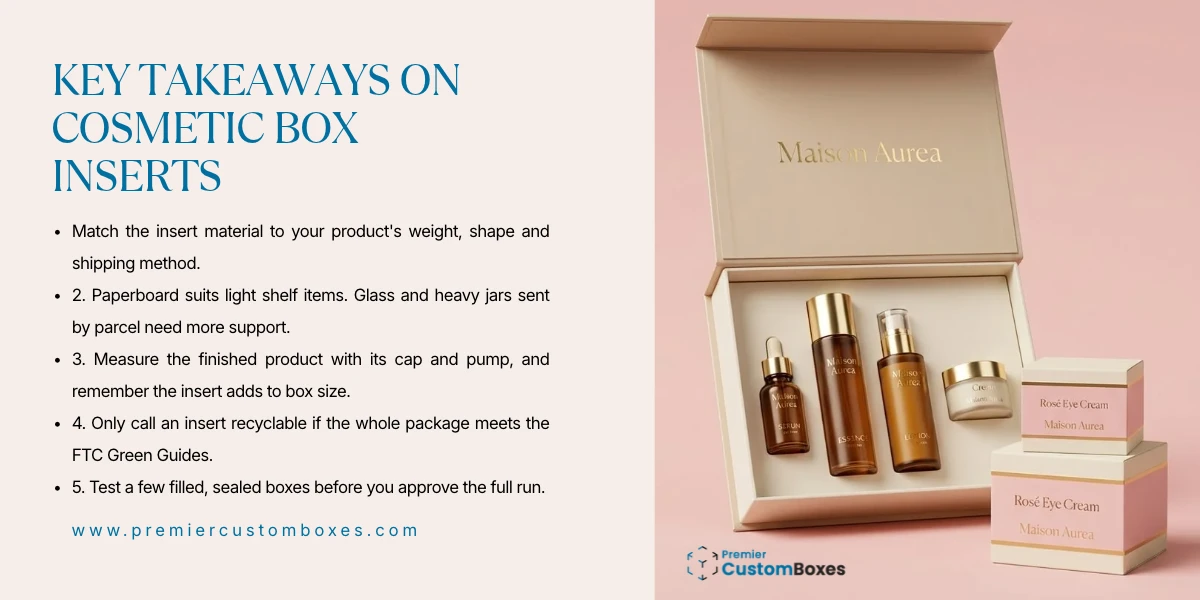
Key takeaways on cosmetic box inserts
Cardboard Insert vs. Foam Insert: Which Material Is Best?
For most cosmetics, a cardboard insert gives the best mix of protection, cost and recyclability. Foam cushions heavy glass and luxury sets better, but it costs more and makes recycling harder. Molded pulp sits in between, and it's made from paper fiber.
| Material | Protection | Look | Cost direction | Recycling | Best for |
|---|---|---|---|---|---|
| Paperboard (cardstock) | Light. Holds items still. | Clean, fully printable | Lowest | Paper-based, widely recycled | Lipstick, mascara, tubes, shelf boxes |
| Corrugated cardboard | Good. Wavy inner layer absorbs bumps. | Plain or printed | Low to medium | Paper-based, widely recycled | Glass bottles and jars in parcels |
| Molded pulp | Good cushioning and grip | Natural, textured | Medium. Needs a mold. | Paper fiber, no plastic | Eco-focused brands, jars, sets |
| EVA foam | Very good. Soft but firm. | Luxury, sharp cut-outs | Higher | Plastic. Harder to recycle. | Perfume, high-end gift sets, rigid boxes |
| PE / EPE foam | Very good shock absorption | Functional | Medium | Plastic. Harder to recycle. | Heavy glass in shipping boxes |
| Plastic tray | Medium | Glossy, shaped | Medium. Needs a mold. | Depends on plastic type | Palettes and multi-item kits |
Cardboard insert vs. foam insert in simple terms
Paperboard is thin, stiff board that works for light products. Corrugated cardboard has a wavy layer between two flat layers, so it's stronger and takes hits better. EVA foam is soft but firm, and it's cut to the product's exact shape. PE foam is a lightweight plastic foam that soaks up bumps.
Cardboard wins on price, printing and recycling. Foam wins on shock absorption, which means how well a material softens a drop. If your product is light, or it ships inside a well-packed outer carton, cardboard is usually enough.
The hybrid option: card with foam only under glass
A hybrid insert is a printed card tray with a small foam pad only under the glass item. You keep the look and print quality of card, and you add cushioning where it counts. It also uses far less foam. Make the pad easy to pull out so customers can separate it from the paper before recycling.
How Do You Choose an Insert for Your Product?
Start with the product's shape and weight. Then look at how it travels. A light lipstick and a heavy glass jar need very different support.
Packaging inserts for glass bottles (serums and perfume)
Glass bottles need a cavity that stops side-to-side movement and lifts them off the box floor. For parcel shipping, use corrugated, molded pulp or a hybrid with foam under the base. Protect the neck and pump too. A dropper or pump that sticks up can snap if the lid presses on it.
Cream jar insert
To hold a cream jar still, use a snug round cavity or a collar-style card insert that grips the jar around its middle. Heavy jars shift easily, and a moving jar can crack its lid or the glass. Tell us the jar's weight and we'll suggest a board strong enough to carry it. You'll find ready styles on our custom cream boxes page.
Lipstick, palette and tube inserts
- Lipstick: A paperboard insert with a round hole keeps the tube upright and stops it sliding.
- Palettes: A shallow tray that holds the edges flat keeps the pans from cracking.
- Tubes: Light tubes often need only a simple card cradle, or no insert at all.
Multi-product gift sets
One insert can hold several products. Give each item its own cavity and keep heavy pieces away from light ones. For example, a glass toner next to a lip balm needs a wall between them. Without it, the heavy item hits the light one every time the box gets bumped.
Decision table: product x shipping channel
| Product | Retail shelf | E-commerce parcel | Gift set |
|---|---|---|---|
| Glass serum bottle | Paperboard cavity | Corrugated, molded pulp or hybrid with foam base | EVA foam or hybrid in a rigid box |
| Cream jar | Paperboard collar | Corrugated round cavity | Foam or card cavity in a rigid box |
| Lipstick | Often no insert, or a card cradle | Paperboard insert | Printed card tray |
| Palette | Shallow card tray | Card or corrugated tray | Foam or card tray |
| Multi-item set | Die-cut card insert | Corrugated with separate cavities | Foam or hybrid with branded lid |
| Plastic tube | Usually none | Simple card divider | Card cradle |
How to Choose and Order Cosmetic Box Inserts, Step by Step
Follow these seven steps in order. Most fit problems start when someone skips the first two.
Step 1: Measure the finished product in inches
Measure length, width and height (L x W x H) exactly as the product will ship, with the cap, pump or dropper on. Don't measure the glass alone. Take each measurement at the widest point, which is sometimes the cap, not the bottle. Our guide on how to measure your product for a custom cosmetic box walks you through it.
Step 2: Weigh it
Put the filled product on a small scale. The weight tells us how thick the insert board should be. A heavy jar in thin card will tear its cavity during shipping.
Step 3: Pick the material
Use the tables above. Plan for the trip first and the look second. A gift box that goes in the mail still needs shipping-level protection.
Step 4: Choose the fit gap
The fit gap (also called tolerance) is the small extra space around the product so it slides in. Too tight, and customers struggle to pull it out and may scuff the finish. Too loose, and it rattles. Aim for a snug fit that still lets the product lift out easily.
Step 5: Plan the box size around the insert
The insert takes up room. Its walls and base add to every side, so the inside of the box must be bigger than the product by the insert's thickness. Size the box to the product alone and it won't close once the insert goes in. Send us the product size and we'll work out the box from there.
Step 6: Approve the dieline and proof
A dieline is a flat outline of the box or insert that shows where to cut and fold. We supply free CAD templates and a free proof, so you can check every cavity before printing. Look closely at hole sizes, fold lines and where your artwork lands.
Step 7: Test before the full run
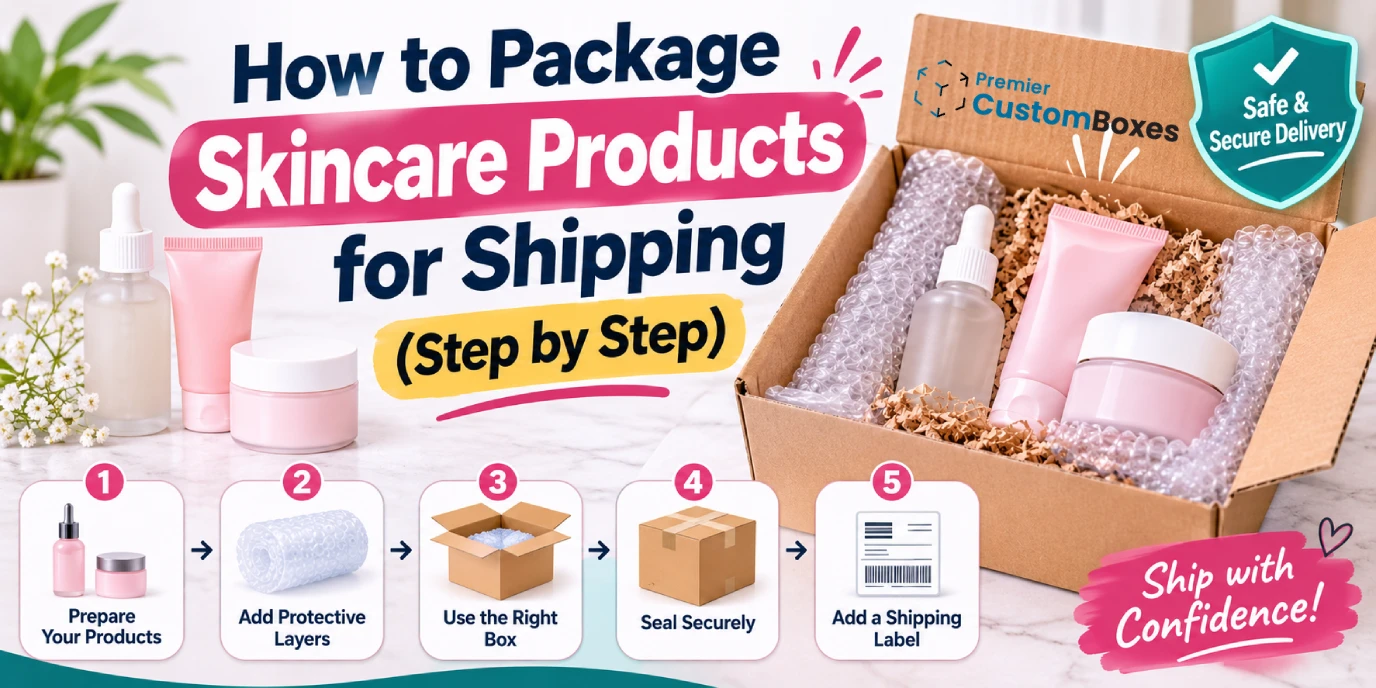
Pack a few boxes with real, filled and sealed products. Close them, shake them, and mail a couple to a friend or team member. When they arrive, open them and check for movement, scuffs or cracked caps. Our step-by-step guide to packaging skincare for shipping covers the outer carton too.
How Does a Die-Cut Insert for a Cosmetic Box Work?
A die-cut insert is cut with a custom blade into the exact shape of your product. It's the most common insert style because it fits closely, prints well and folds flat for storage.
First, we draw the insert's dieline from your measurements. Next, we make a cutting die, which is a custom blade shaped like your dieline. It presses through the board like a cookie cutter, cutting holes and scoring fold lines in one pass. The flat sheet then folds up into a tray.
The die is called tooling. Every new shape needs new tooling, which is why custom shapes add setup cost. Molded pulp and plastic trays need a mold for the same reason.
Artwork tips for die-cut inserts:
- Don't put your logo where the product will cover it. Print on the visible edges or the lid.
- Keep text away from fold lines so it doesn't crack or bend out of view.
- Full-color printing uses CMYK, the four ink colors (cyan, magenta, yellow and black). Send artwork in CMYK so colors match the proof.
Can You Brand an Insert?
Yes. A printed insert is one of the first things a customer sees, so it's good space for your logo, a short thank-you or a QR code that links to how-to videos.
Common options include full-color printing, a solid brand color, wrapped paper on rigid inserts, foil and soft-touch coating. Spot UV is a shiny clear coat on selected spots. Foil gives a metal-look gold or silver, and embossing creates a raised shape. Some luxury boxes use flocking, a soft velvet-like surface. Ask our team whether it suits your box.
Match the insert to the box. For example, a matte box with a glossy insert can look mismatched. Our post on matte vs. gloss cosmetic boxes helps you pick a finish for both.
Are Eco-Friendly Cosmetic Box Inserts Worth It?
For most brands, yes. Paperboard, corrugated, kraft and molded pulp inserts protect well, print well and are paper-based. That makes them easier for customers to recycle than foam or plastic.
We offer recyclable, biodegradable kraft cardstock made with sustainable raw materials. Its natural brown look suits clean-beauty brands.
Make honest green claims
Be careful with labels like "recyclable." The FTC Green Guides are US guidance that helps marketers avoid misleading environmental claims. The FTC last revised them in 2012, according to its Green Guides overview. Under 16 CFR 260.12:
- You can make a plain "recyclable" claim only if recycling is available to a substantial majority of consumers or communities where the item is sold. The rule defines that as at least 60 percent.
- The whole package must be recyclable, apart from minor incidental parts. If access is below that level, the claim should be qualified.
That means a card box with a foam insert may not qualify for a simple "recyclable" claim. Make the parts easy to separate and be specific on the label, for example: "Box and insert are paper. Remove foam pad before recycling." Rules differ by state and product type; check your local regulations.
What Affects the Cost of Custom Inserts?
Insert cost depends mostly on the material, the shape and the extras. We don't list fixed prices because every insert is built to order. These are the main cost drivers:
- Tooling: New die-cut shapes or molds add setup cost.
- Material: Foam and rigid board cost more than paperboard.
- Printing: A printed insert costs more than a plain one.
- Layers: Stacked or two-level inserts use more material and labor.
- Finishes: Foil, flocking and wraps add cost.
Ways to save without losing protection: Use card instead of foam for light products. Put foam only under the glass. Leave the insert unprinted if the product covers most of it. Use one insert design across products of the same size. If you're just starting out, our startup guide to low-minimum cosmetic boxes has more budget tips.
Common Insert Mistakes and How to Fix Them
Most insert problems come from measuring wrong or picking the wrong material. Here are the ones we see most often.
| Mistake | What happens | Fix |
|---|---|---|
| Measuring without the cap or pump | Product doesn't fit, or the lid presses on it | Measure the finished product at its widest point |
| Cavity too tight | Hard to remove and scuffs the finish | Allow a small fit gap and add a finger notch |
| Cavity too loose | Rattling and chipped glass | Tighten the cavity or add a collar |
| Foam on every item | Higher cost and harder recycling | Use card, with foam only under glass |
| Ignoring jar weight | Cavity tears in transit | Share the weight and use thicker board |
| Forgetting insert thickness | Box won't close | Size the box around the insert, not the product |
| Printing under the product | Artwork no one sees | Print visible edges or the lid instead |
| Foam in a box sold as eco | Misleading green claim | Switch to paper or qualify the claim |
| Skipping a shipping test | Damage shows up after launch | Test filled, sealed boxes in real parcels |
If a retailer asks for a formal shipping test, one common reference is ISTA 3A. It's a simulation test for packaged products of 150 lb or less shipped by parcel carrier. It tests the package and product together, with drop and vibration steps, as this ISTA 3A explainer describes. For a formal test, use an independent testing lab.
Pro Tips From Our Packaging Team
- Send us the actual product, or exact specs from your bottle or jar supplier, before you finalize the box.
- Add a small thumb notch beside tight cavities so customers can lift the product out easily.
- Use one standard insert across several SKUs of the same size to keep tooling costs down.
- Print care or usage tips on the insert lid. It's free space, and customers read it.
- Pick the insert and box finish at the same time so they match.
How to Order Custom Inserts from Premier Custom Boxes
Tell us your product size, quantity and box style. We'll suggest the right insert and send you a free design mockup.
Here's what you get with our custom cosmetic boxes with inserts:
- Free design support with unlimited revisions
- Free CAD templates, free proofing and free coatings
- A low minimum order of 100 boxes
- Standard turnaround of 10–12 business days, with rush service that ships within a week
- Free shipping to all 50 US states
- Any size, shape and material on request, plus custom inserts, die-cut windows, foil, embossing and spot UV
When you compare cosmetic packaging companies, ask each one how they size the box around the insert. Our packaging team can help you choose the style, material and finish for your product. Call (800) 844-1443 or email justin@premiercustomboxes.com.
Frequently Asked Questions
What are cosmetic box inserts used for?
They hold products in place so they don't move, break or scuff. They also separate items in sets and make the box look neat and premium when it's opened.
Do all cosmetic boxes need inserts?
No. A light product in a snug box sold only on a shelf often doesn't need one. Glass, heavy jars, sets and parcel orders usually do.
Do glass cosmetic bottles always need inserts?
Not always, but usually when they ship by parcel or share a box with other items. A single bottle in a tight carton on a shelf may be fine without one.
Cardboard insert vs. foam insert: which is better for cosmetics?
Cardboard suits most cosmetics because it costs less, takes print well and is easier to recycle. Foam is the better pick for heavy glass and luxury gift sets that need extra cushioning.
How do you make a cream jar stay in place in a box?
Use a snug round cavity or a collar insert that grips the jar around its middle. Choose board thick enough for the jar's weight so the cavity doesn't tear.
Can inserts be customized for several products in one box?
Yes. Each item gets its own cavity sized to fit, with walls between heavy and light products so they don't hit each other.
Can I get a sample before the full order?
Every order comes with a free proof and design mockup before printing. For a physical sample, ask our team what's possible for your box style.
Get a Free Quote
The best insert holds your product snugly, suits how it ships and matches your box. Measure carefully, pick the material for the trip and test before the full run.
Ready to protect your products and make them stand out? Get a free quote from Premier Custom Boxes. Tell us your box size, quantity and style, and our packaging team will send you pricing and a free design mockup. Request your free quote today.